Salah Abdeljabar
Projects

Field deployments and protocol research

Real hardware, real environments, and the protocols that bridge research to real-world impact.

LoRaWAN Gateway Mesh: Experimental Evaluation and Protocol Analysis2026

LoRaWAN Gateway Mesh: Experimental Evaluation and Protocol Analysis

Hands-on evaluation of the RAK and ChirpStack LoRaWAN Gateway Mesh protocol, focusing on real hardware testing, system design, and performance limitations.

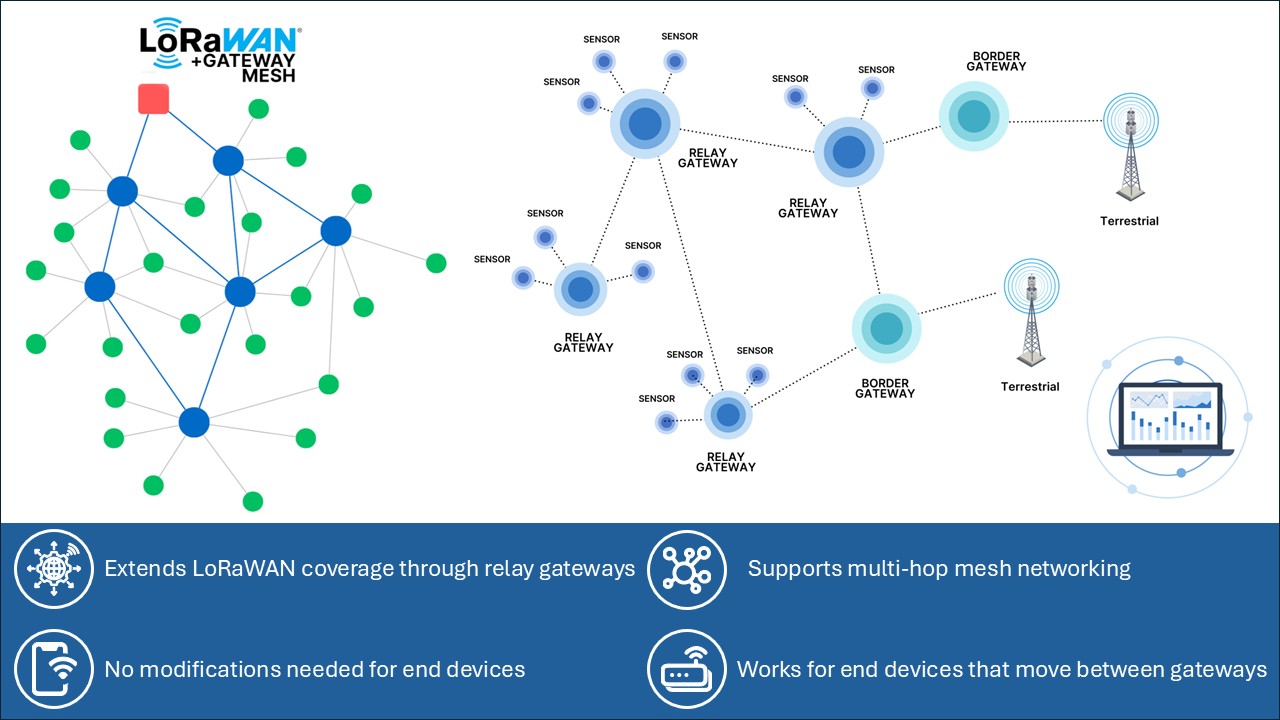
This project investigates the recently proposed LoRaWAN Gateway Mesh implementation by RAKwireless and ChirpStack. Unlike conventional single-hop LoRaWAN, Gateway Mesh enables multi-hop relays between gateways so coverage can be extended without adding backhaul connectivity at every site, while preserving compatibility with standard end devices.

The work configures a multi-gateway testbed (2–3 LoRaWAN gateways plus several end nodes), studies the relay and border gateway roles, and quantifies performance under realistic field conditions. The goal is to connect observed system behavior back to specific hardware, software, and protocol design decisions.
DTN for Rural Connectivity via Public Transport Systems2025

DTN for Rural Connectivity via Public Transport Systems

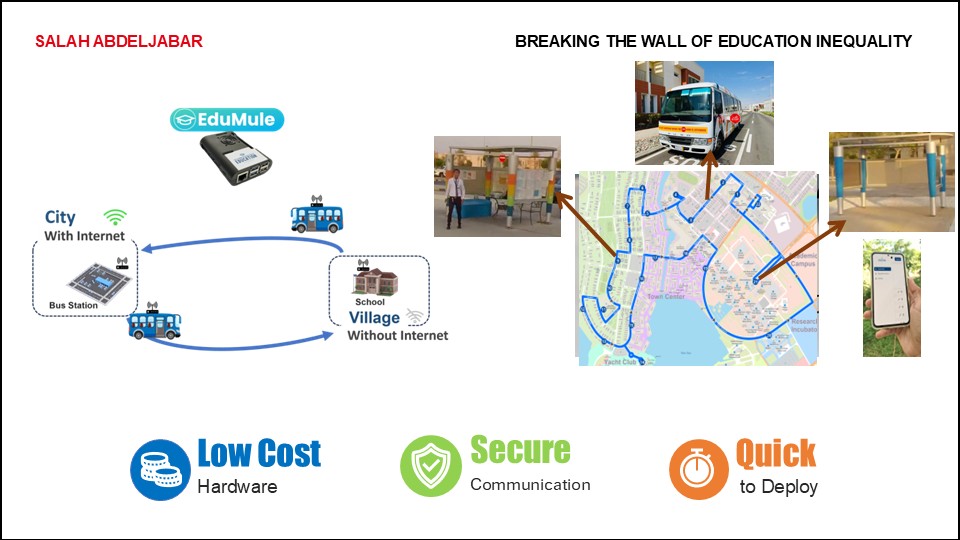
Leveraging public transport as data mules to provide Internet-like connectivity in regions where fixed infrastructure is missing or too expensive to deploy.

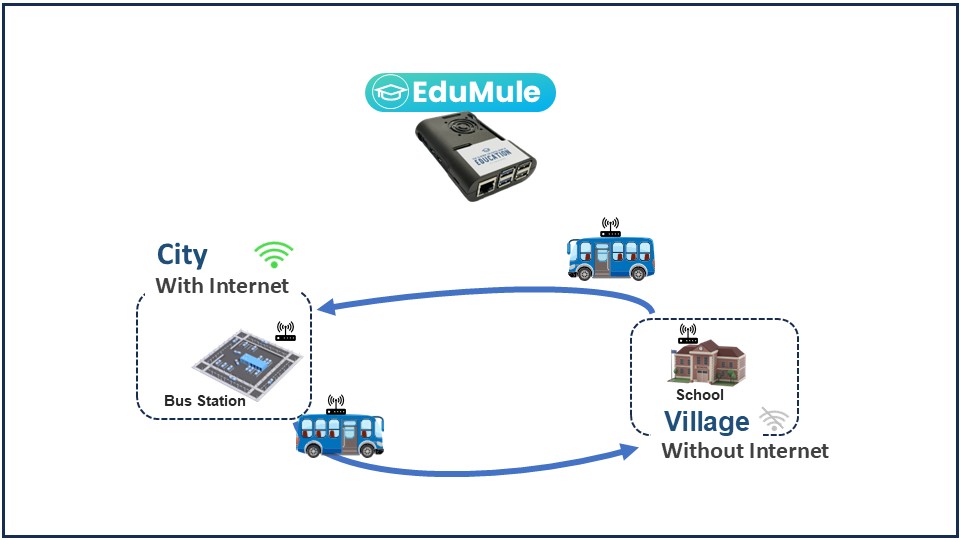
Internet access is essential for education, commerce, and healthcare, yet a persistent digital divide leaves rural communities behind. This project shows how informal public transport — minibus taxis and shared transit — can act as data mules to deliver Internet-like connectivity without new towers or expensive backhaul.

The framework combines analytical modelling with real mobility datasets from Nouakchott, Accra, and Addis Ababa to quantify performance and demonstrate practical feasibility. It was published in the IEEE Internet of Things Journal.

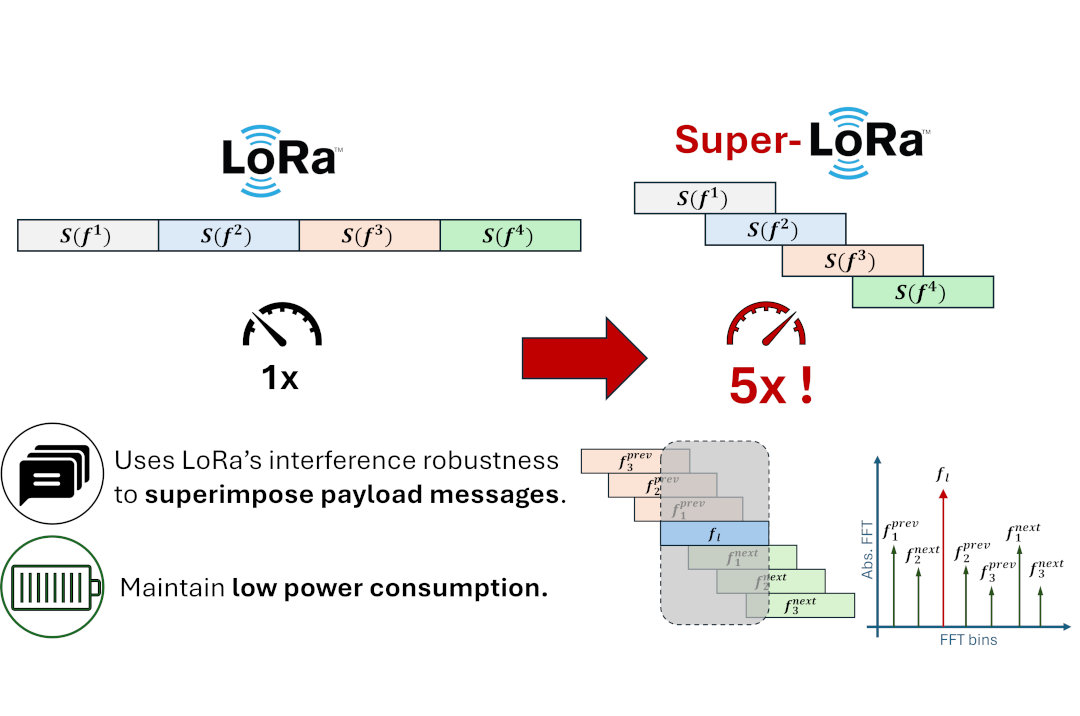
Super-LoRa: Making Long-Range IoT Faster and Smarter2025

Super-LoRa: Making Long-Range IoT Faster and Smarter

A novel design that multiplies data rates for long-range IoT while staying low-power and practical, validated on real software-defined radios and campus-wide experiments.

Super-LoRa answers a simple question: can long-range, low-power IoT links be made much faster for emerging AIoT applications? The proposed payload-superposition technique boosts throughput by up to 5× while staying within the constraints of real IoT devices and ISM-band regulations.

The design was validated on software-defined radios with a campus-wide experimental testbed at KAUST and published in the IEEE Internet of Things Journal. It also won the IEEE ICC 4-Minute Thesis (4MT) Competition in 2025.

DTN for Equitable Digital Learning in Rural Areas2024

DTN for Equitable Digital Learning in Rural Areas

DTN framework that delivers digital learning content to rural communities by leveraging transport-based data mules to bridge the educational divide.

Millions of learners in rural and remote regions are excluded from digital education because reliable Internet is out of reach. This project proposes a delay-tolerant networking framework that uses existing transport infrastructure as data mules to distribute educational content and collect learning feedback asynchronously.

The system supports bidirectional flow under intermittent connectivity — storing data at edge nodes and forwarding when vehicles pass — giving underserved communities Internet-like access to learning resources without continuous backhaul.

Hybrid RF/FSO Maritime Connectivity: Connecting Remote Islands2024

Hybrid RF/FSO Maritime Connectivity: Connecting Remote Islands

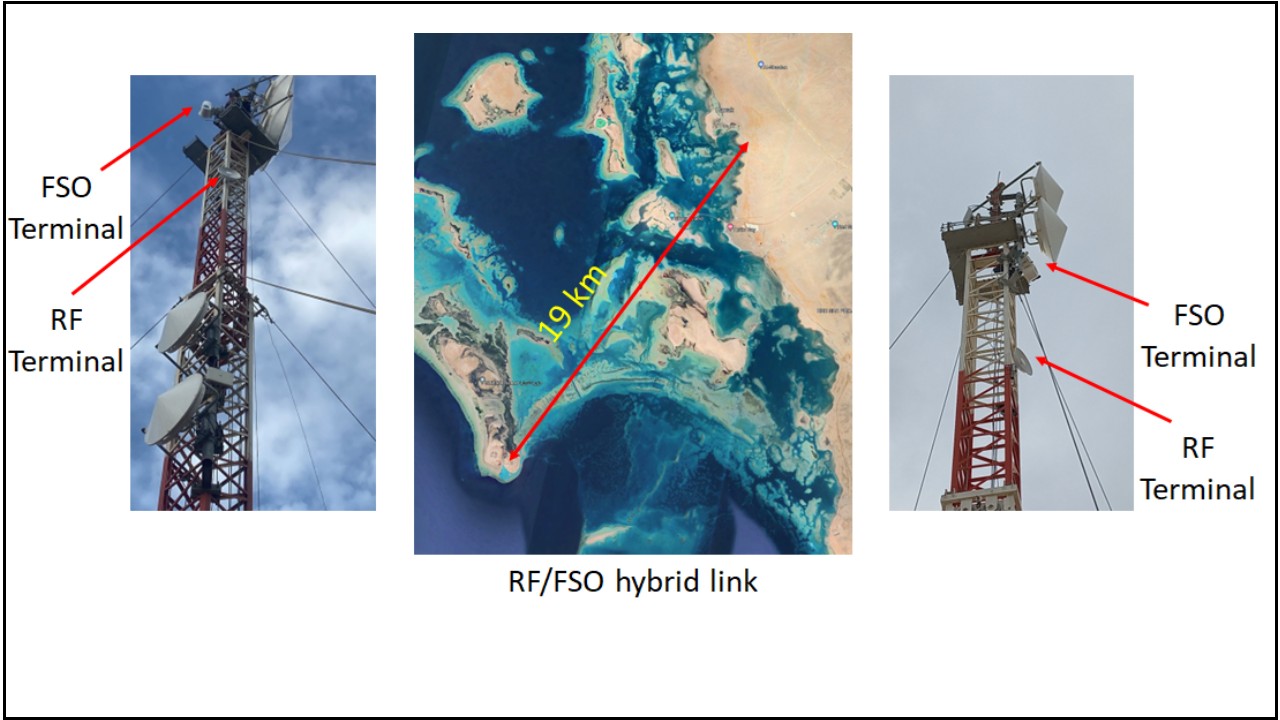
Real-world deployment of hybrid Free Space Optics and Radio Frequency links to deliver 20 Gbps connectivity to a remote island 19 km offshore.

A breakthrough in maritime connectivity: a hybrid RF/FSO link deployed across 19 km of open Red Sea water to connect Shabara Island with the mainland shore, delivering up to 20 Gbps to a previously unreachable destination.

In collaboration with Red Sea Global and under Prof. Mohamed-Slim Alouini, I led the networking design — architecture, switch configuration, redundancy, and security — to meet operational and data governance requirements. Featured by Arab News, Saudi Gazette, and KAUST CTL.

RIS-Assisted VLC: Sum-Rate and Fairness Optimization2024

RIS-Assisted VLC: Sum-Rate and Fairness Optimization

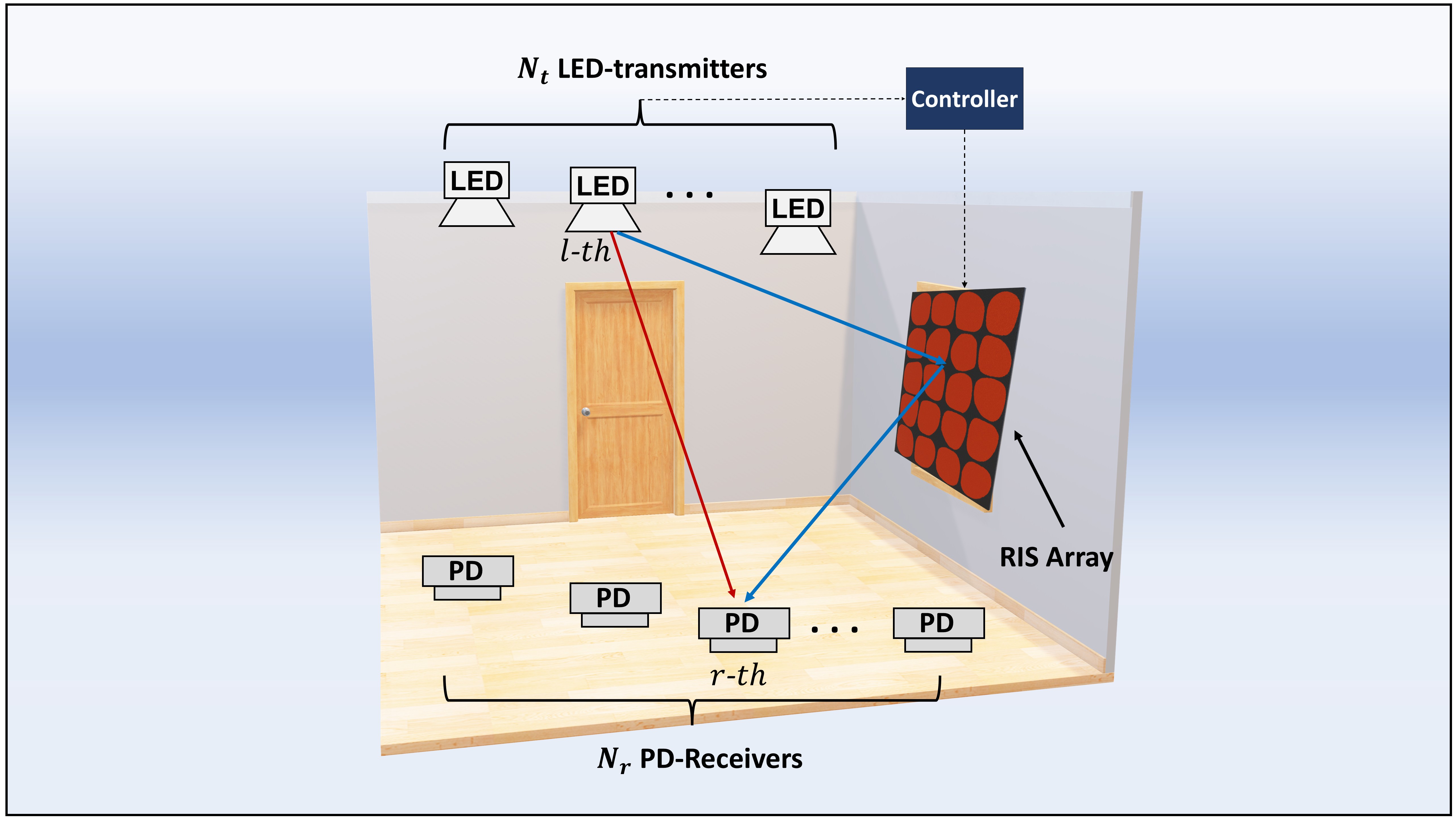
Optimization framework for RIS-assisted VLC that improves network sum-rate and user fairness.

Indoor VLC performance is strongly tied to line-of-sight quality, so users with weak LOS become fairness bottlenecks. This project controls optical RIS elements to create stronger non-LOS paths, jointly optimizing aggregate throughput and user-level fairness.

The work models both specular and diffuse RIS elements and solves the resulting non-convex problems with metaheuristics — a Genetic Algorithm for specular element association and Particle Swarm Optimization for diffuse element orientation. Published in IEEE OJ-COMS, 2024.

RIS-Assisted Visible Light Communication for Outdoor Applications2023

RIS-Assisted Visible Light Communication for Outdoor Applications

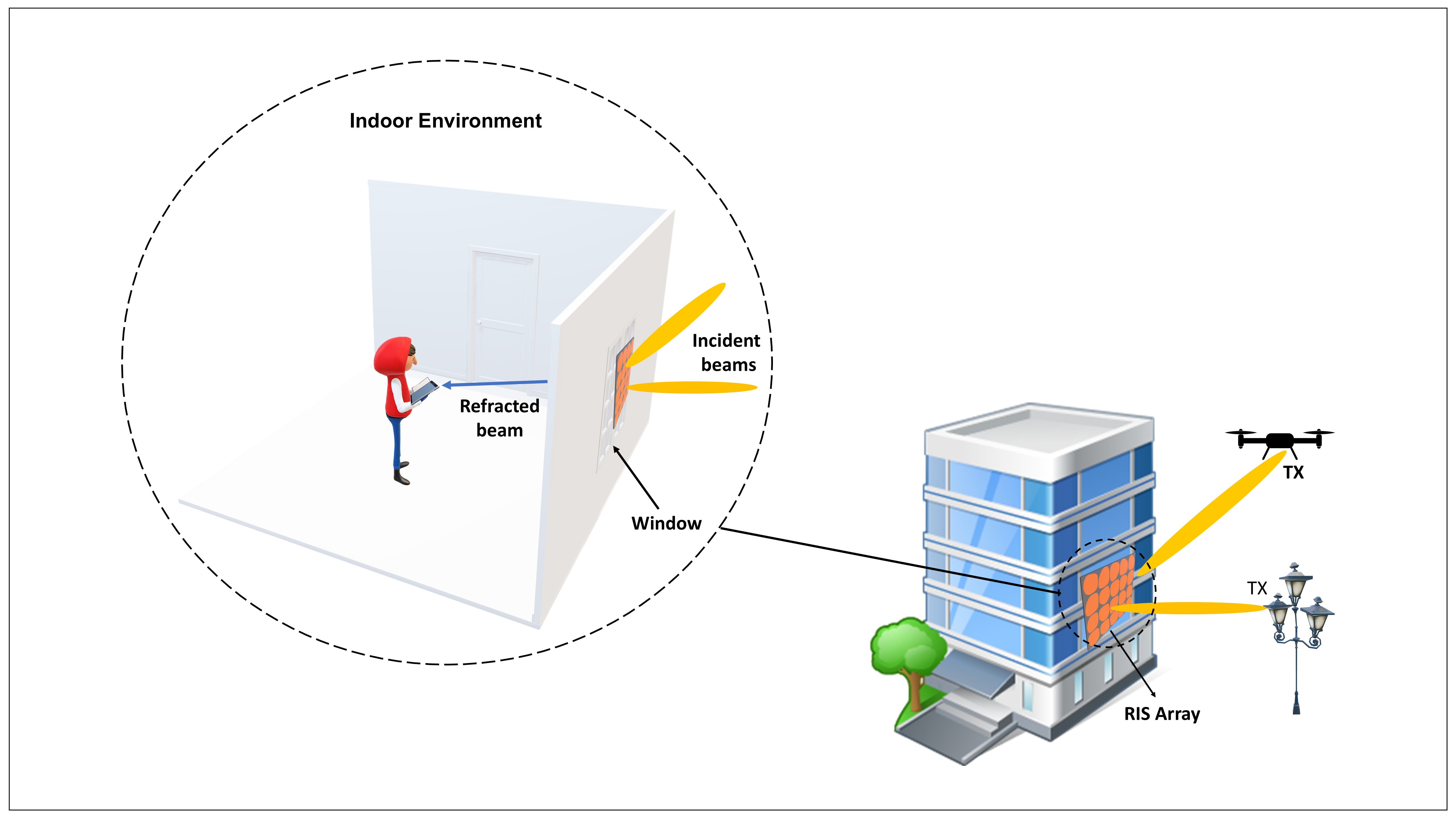
Using intelligent reflective surfaces to enable reliable outdoor visible light communication for UAVs, vehicles, and smart city applications.

Outdoor VLC promises license-free spectrum and high data rates, but suffers from LOS blockage, transmitter–receiver misalignment, and user mobility. This project uses Reconfigurable Intelligent Surfaces to create adaptive reflective paths that overcome these limitations.

Recognized with the Third-Place Prize at the IEEE SusTech 2023 Student Poster Contest in Portland, USA, for its potential impact on sustainable communication technologies.

TV White Space IoT Deployment with Microsoft Research2023

TV White Space IoT Deployment with Microsoft Research

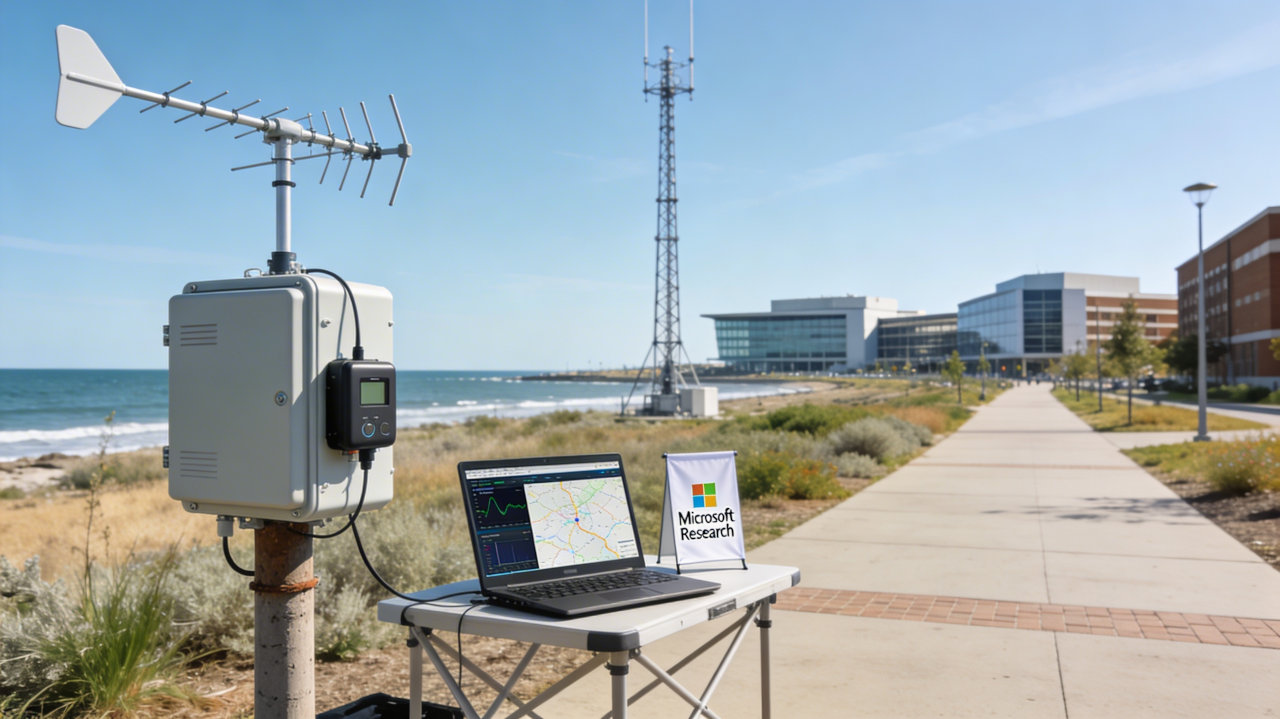
Joint KAUST–Microsoft Research field deployment of TV White Space IoT radios, demonstrating long-range, low-power connectivity for real-world sensing applications.

A collaboration with Microsoft Research to deploy and evaluate TV White Space (TVWS) IoT radios at KAUST, validating Microsoft's Whisper-project devices in a new geographical and regulatory context.

By using underutilized TV spectrum instead of crowded ISM bands, TVWS delivers better propagation and longer reach. The work identifies practical constraints, trade-offs, and deployment lessons that inform wider rollout across residential, urban, agricultural, and rural environments.